Skip to the dispatches
Menu

Dispatches from a universe under construction

The cosmos keeps a construction diary.

Worldbuilding, strategic design, difficult trade-offs, and honest notes from behind the airlock. These are the ideas shaping Cosmo Crafter before—and after—they become systems.

Why this archive exists

A changelog tells you what moved. A chronicle tells you why.

Cosmo Crafter is a persistent strategy game: economy touches exploration, exploration changes diplomacy, and diplomacy can turn a quiet fleet order into history. The interesting work lives between those systems. This archive makes that reasoning visible.

The archive

Ideas with engine trails.

01

Worldbuilding

The Alpha Verse is not a backdrop

A universe becomes interesting when distance, scarcity, and imperfect information can change a commander’s plans.

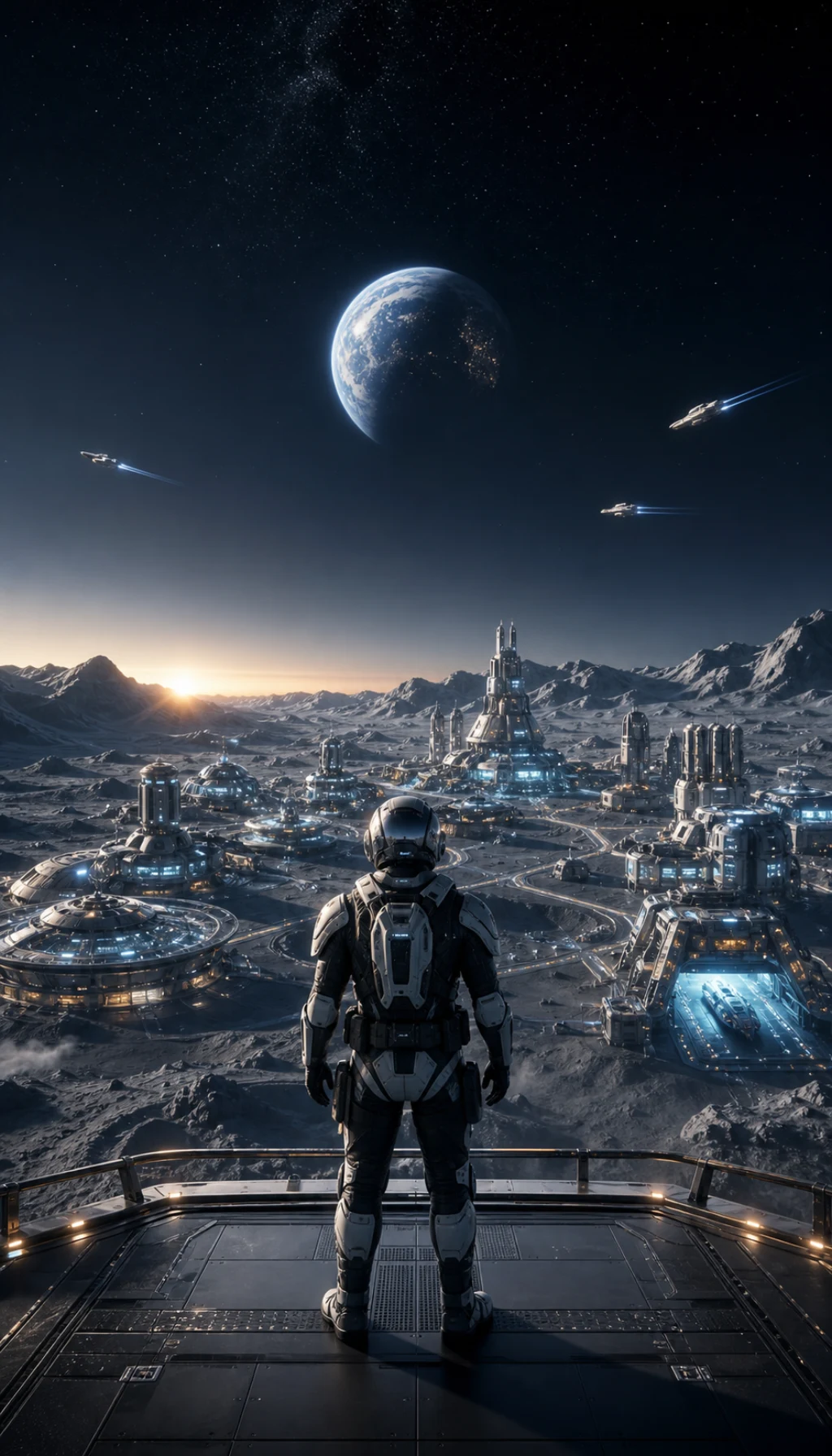
Cosmo Crafter begins with a simple promise: the map should matter. A remote planet is not merely another screen, and a neighboring settlement is not simply a name in a list. Every coordinate creates questions about travel time, fuel, visibility, protection, and whether the opportunity waiting there is worth the journey.

That is why the Alpha Verse is built as a strategic place rather than decorative scenery. Worlds carry different possibilities. Radar reveals only part of the truth. Fleets occupy time while they travel. The space between two decisions is where anticipation—and sometimes regret—has room to grow.

Working principle Exploration should create knowledge, and knowledge should change the next decision.
02

Systems

An economy should tell the story of its owner

Resources become meaningful when they reveal priorities, expose dependencies, and make ambition expensive in interesting ways.

A settlement is more than a collection of buildings. It is an argument about what matters now. Storage protects tomorrow. Research sacrifices immediate output for future leverage. A shipyard turns an internal economy into reach. Defenses buy confidence, but every layer of protection competes with another possible investment.

The goal is not to hide arithmetic. It is to make arithmetic expressive. Two commanders can begin on similar worlds and produce radically different civilizations because they tolerated different risks, built different supply chains, and recognized different moments to expand.

Working principle A strong economy is not the largest number; it is a set of choices that can survive contact with change.
03

Strategy

A fleet order is a promise made to the future

Once a fleet launches, intent becomes movement—and movement gives every rival time to react.

Space strategy becomes compelling when orders have weight. A reconnaissance flight, cargo transfer, colonization attempt, or coordinated assault commits ships and resources to a future position. The decision does not disappear into an instant result; it travels across the map where timing and intelligence can reshape its outcome.

This makes logistics part of conflict. The most dramatic vessel is still limited by what can reach it, what it knows, and whether its mission supports the civilization behind it. Spectacle matters, but consequence is what turns a launch into a story.

Working principle Power is not what sits in a hangar. Power is what can arrive, act, and return when it matters.
04

Lore

Seven origins, not seven stat blocks

A playable civilization should offer a point of view before it offers an optimization problem.

The seven peoples of Cosmo Crafter were shaped by different homes: oceans, forests, lava fields, gas giants, frozen frontiers, and terrestrial worlds. Those environments suggest strengths, but more importantly they suggest values. What does a civilization protect when survival once depended on motion? What does it build when pressure has always been ordinary?

Lore gives mechanics a memory. A currency becomes part of a culture; a preferred discipline becomes an inherited habit. Players remain free to defy those traditions, but every departure is more meaningful when there was a tradition to begin with.

Working principle An origin should inspire a strategy without dictating the only strategy worth playing.
05

Design

Building a universe where setbacks remain playable

Conflict needs consequences, but lasting strategy also needs recovery, counterplay, and reasons to return.

A persistent world remembers what players do. That memory creates pride and rivalry, but it can also turn one bad moment into a reason to leave. The design challenge is to let victories matter without making defeat equivalent to disappearance.

Defenses, treaties, intelligence, debris recovery, coordinated action, protected growth, and economic rebuilding all contribute to that balance. No single mechanism can make a universe fair. Fairness emerges when players can understand danger, prepare for it, and find a credible next move after plans go wrong.

Working principle The best consequence creates a new decision instead of ending the conversation.
06

Behind the airlock

Why Cosmo Crafter is being built in public

A living strategy game grows stronger when its reasoning, rough edges, and changing priorities remain visible.

Cosmo Crafter is an ambitious universe made by a very small team. Building in public turns that constraint into a relationship. Players can see systems take shape, understand why priorities move, and challenge assumptions before they harden into permanent design.

These chronicles are part of that practice. They are a place for explaining not only what changed, but what question a change was trying to answer. The result should be a development history that reads less like a ledger and more like the construction diary of a universe learning how to hold together.

Working principle Transparency is not a substitute for progress; it is how progress becomes a shared journey.

Continue the conversation

A universe is better when its commanders can question the blueprints.

Follow development, challenge an assumption, or tell us which corner of the Alpha Verse deserves the next dispatch.

Join the Discord Enter the universe