
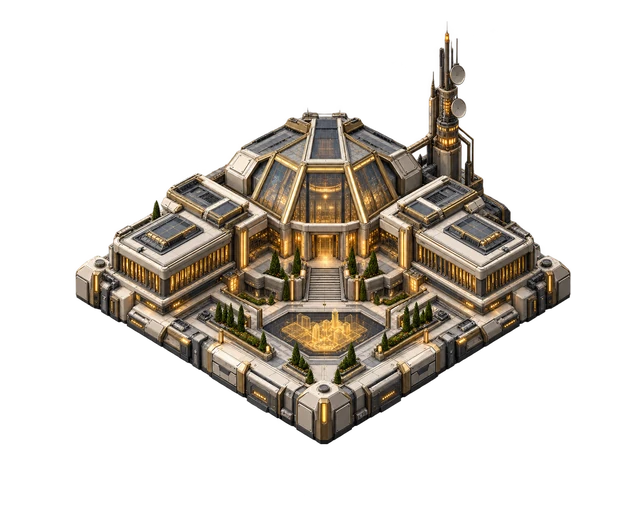
Buildings
Colonial Administration
Choose a settlement charter with balanced economic gains and costs. Later changes cost home-currency credits and have a seven-day cooldown.
Maximum level
5
Base construction time
2 hr
Unlock
Empire Expansion I
Base raw-material cost
Higher levels scale from these seeded base quantities.
Manufactured component cost
- Structural Frames × 4
- Control Circuits × 4
Settlement specialization
Empire Expansion I unlocks five Administration levels. A settlement can keep its ordinary rules or choose one charter. Both the nominal benefit and trade-off deepen from 4% to 12%; research and shared caps determine the actual result shown in the review.
- Mining Colony More raw production; slower component manufacturing.
- Forge World Faster component manufacturing; less raw production.
- Shipworks Faster shipyard and Defense Works queues; slower building construction.
- Research Station Faster research paid from this settlement; less raw production.
- Trade Hub Lower listing fees for market orders from this settlement; slower shipyard queues.
- Shared caps Combined raw-production bonuses stay within 30%, and duration reduction within 35%. Penalties remain even when a gain has reached its cap.
Changing a charter
Review the actual effects, home-currency fee and cooldown before confirming a change. These specializations are separate from the colony charters that buy additional settlement slots.
- First choice The initial specialization is free. A settlement without a charter keeps its normal progression.
- Later changes Changing specialization or returning to neutral costs 750 home-currency credits, paid to the system reserve.
- Cooldown Each actual choice starts a seven-day cooldown. Selecting the existing charter does not spend credits or restart it.
- Timing Production changes at a captured server time. Existing queued durations and paid costs remain fixed; new work uses the current charter.
- Higher levels Administration levels increase the nominal gain and cost together: 4%, 6%, 8%, 10%, then 12%.